

How Much Can You Actually Save With A Variable Speed Pump?
Understanding how your pool system works will enable you to troubleshoot potential problems more easily and build a foundation for learning about each piece of equipment, such as the pump, filter, or heater. This guide will explain the entire swimming pool plumbing and filtration system, complete with diagrams.
How Do Swimming Pool Systems Work?
Pool water moves in a continuous cycle driven by the pump. Equipped with an electric motor, the pump has an impeller that drives water through the skimmers (at the top of the pool) and the sumps (at the bottom), directing it to the filter. The clean, filtered water is then piped through the return nozzles (a series of small valves placed around the pool).
Five Factors to Consider When Buying an Automatic Pool Cleaner
Pool Size and Shape
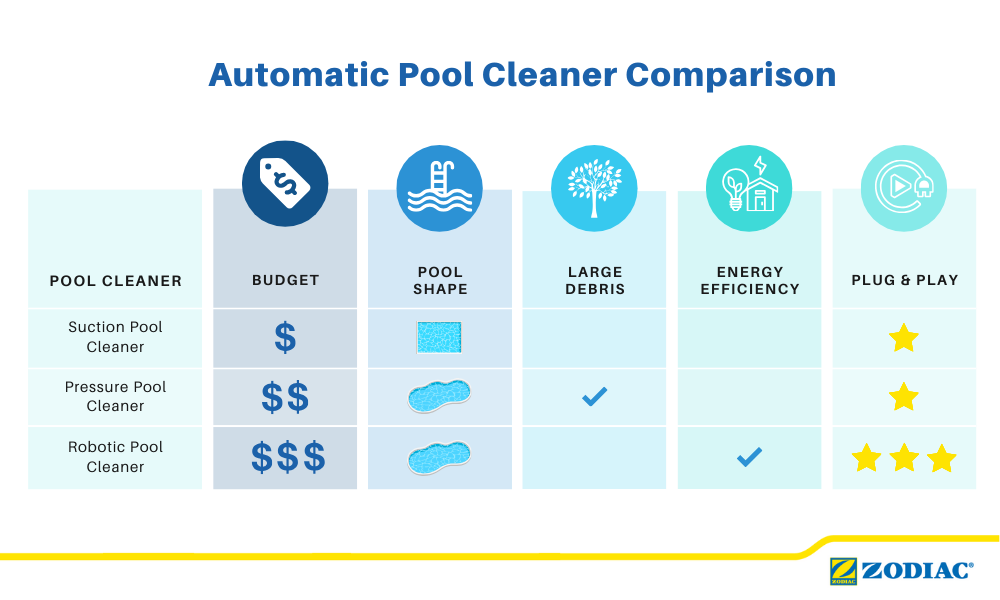
The type of pool cleaner that is best for you largely depends on the dimensions and design of your pool. For smaller pools, a suction cleaner is often the most effective option. However, a robotic pool cleaner may be a better choice if you have a large pool with a lot of debris. Moreover, the design of your pool is also a crucial factor to consider. Pools with many corners and tight spaces are best suited for robotic pool cleaners equipped with swivel cords, which ensure seamless movement and prevent tangling in confined areas.
The Type of Debris
The type of debris present in your pool affects the choice of pool cleaner you should go for. For instance, if your pool has larger debris, such as leaves and twigs, a pressure pool cleaner is usually more effective. However, robotic pool cleaners that offer precision cleaning are more appropriate for pools with finer particles like sand and dirt. Special debris types like algae or pet hair require special consideration since different cleaners have varying abilities to handle them. Therefore, it's important to choose a cleaner well-suited to your pool's specific challenges.
Energy Efficiency
When you are selecting a pool cleaner, it's important to consider energy efficiency. Different types of cleaners have varying impacts on your energy usage. Robotic pool cleaners are known for their energy efficiency. They work independently from your pool's filtration system and usually come with energy-saving features. On the other hand, suction and pressure cleaners are connected to the pool's filtration system, which could increase your overall energy consumption. Therefore, if you prioritise energy efficiency, a robotic pool cleaner can be a better option that balances effective cleaning and lower energy costs.
Plug & Play
When selecting a pool cleaner, one critical aspect is the "plug and play" capability - essentially, how easy it is to set up and use the cleaner right out of the box. Suction pool cleaners are known for their simplicity, directly attached to the pool's existing filtration system. While this means fewer additional setups, it also means limited functionality. Pressure pool cleaners, which connect to a pool's return line, often require an additional booster pump for optimal performance. This additional requirement means more setup time and potentially higher energy costs. However, they are better at picking up larger debris and reducing wear on your pool's main filtration system.
Robotic pool cleaners are at the forefront of convenience and efficiency in pool maintenance. They operate independently of your pool's system and are equipped with their own filtration system, so you just plug and place them in the pool. While suction and pressure pool cleaners have their benefits, they fall short in the plug-and-play aspect when compared to robotic cleaners. If convenience and efficiency are your top priorities, a robotic pool cleaner is a clear winner.
Price and Warranty
When you're in the market for a pool cleaner, it's important to consider both the price and the warranty. Pool cleaners come in various price ranges, with some being more affordable and others being more expensive, but with long-term savings in energy efficiency and durability. For example, a high-end robotic pool cleaner may cost more initially, but it could offer better longevity and energy efficiency in the long run. Additionally, it's essential to have a comprehensive warranty that covers critical components like the motor. As a general rule, the cheaper the cleaner, the shorter the lifespan, so keep this in mind when comparing models.
Type of Pool Cleaners
Now that we have gone over the crucial factors to consider, including debris type, energy efficiency, convenience, and price, it is time to delve deeper into the three main types of pool cleaners: suction, pressure, and robotic. Each type offers distinct advantages that cater to varying pool requirements.
Suction Pool Cleaner
Suction pool cleaners are similar to how a vacuum cleaner works. They operate when the pool pump is active and attached to the pool's skimmer box. These cleaners move around the pool, collecting dirt and debris by suctioning it into the skimmer basket. A suction pool cleaner is ideal for those who don't have many trees or leaves around, and heavy debris rarely enters the pool. They are also a solid option for those on a budget, as they are typically cheaper to install than pressure cleaners.
Pressure Pool Cleaner
Pressure pool cleaners are operated through a dedicated return line and powered by water pressure from the pump, which can be either the main circulation pump or a separate booster pump. This water pressure propels the cleaner around the pool and forces debris into a bag. The benefits of using a pressure cleaner are numerous, including:
The ability to collect large debris such as gum nuts, twigs, and heavy leaf litter is perfect for pools frequently exposed to larger debris.
Most pools can be cleaned in less than 3 hours
Leaves are sucked into a separate bag instead of your filter or pump basket, which helps take the load off your filtration system.
Robotic Pool Cleaner
Robotic pool cleaners, increasingly popular for their efficiency and advanced features, stand out for their independence from the pool filtration system, extending the life of the pool pump and filter and significantly reducing water usage through decreased backwashing. They are self-contained units that gather dirt and debris in an inbuilt bag or cartridge within the cleaner. Known for their advanced intelligence, robotic cleaners ensure they don't get stuck in corners or on steps. They are also known for their energy efficiency, using a low-voltage motor that can cut pool running costs considerably. While they are slightly more expensive, they do provide a more thorough and complete clean than any other cleaner.
Bottom Line
To choose the right pool cleaner, it's essential to consider various factors. These factors include the debris size, the size of the pool, energy efficiency, and your budget. There are three types of pool cleaners: suction, pressure, and robotic. Suction cleaners are less expensive and work well for pools with minimal debris. Pressure cleaners are more effective for cleaning larger debris. Robotic cleaners are the most advanced and energy-efficient option. When making a decision, it's important to consider your specific pool requirements, practicality and cost-effectiveness. Ultimately, the right choice will ensure a clean and enjoyable swimming experience for you.
If you're still unsure about which cleaner will best suit your pool, we encourage you to speak to your local pool professional for guidance around selecting a cleaner with your budget and situation in mind.
Recommended Products

Similar Guides

5 Reasons Why Your Pool Is Still Green Or Cloudy After Shocking
Nothing beats going for a dip in your pool on a beautiful summer day. You go to your backyard only to be greeted with a pool that looks like it’s been on a week-long bender.
That’s right. You’ve got a green pool! :(