

How Much Can You Actually Save With A Variable Speed Pump?
Understanding how your pool system works will enable you to troubleshoot potential problems more easily and build a foundation for learning about each piece of equipment, such as the pump, filter, or heater. This guide will explain the entire swimming pool plumbing and filtration system, complete with diagrams.
How Do Swimming Pool Systems Work?
Pool water moves in a continuous cycle driven by the pump. Equipped with an electric motor, the pump has an impeller that drives water through the skimmers (at the top of the pool) and the sumps (at the bottom), directing it to the filter. The clean, filtered water is then piped through the return nozzles (a series of small valves placed around the pool).
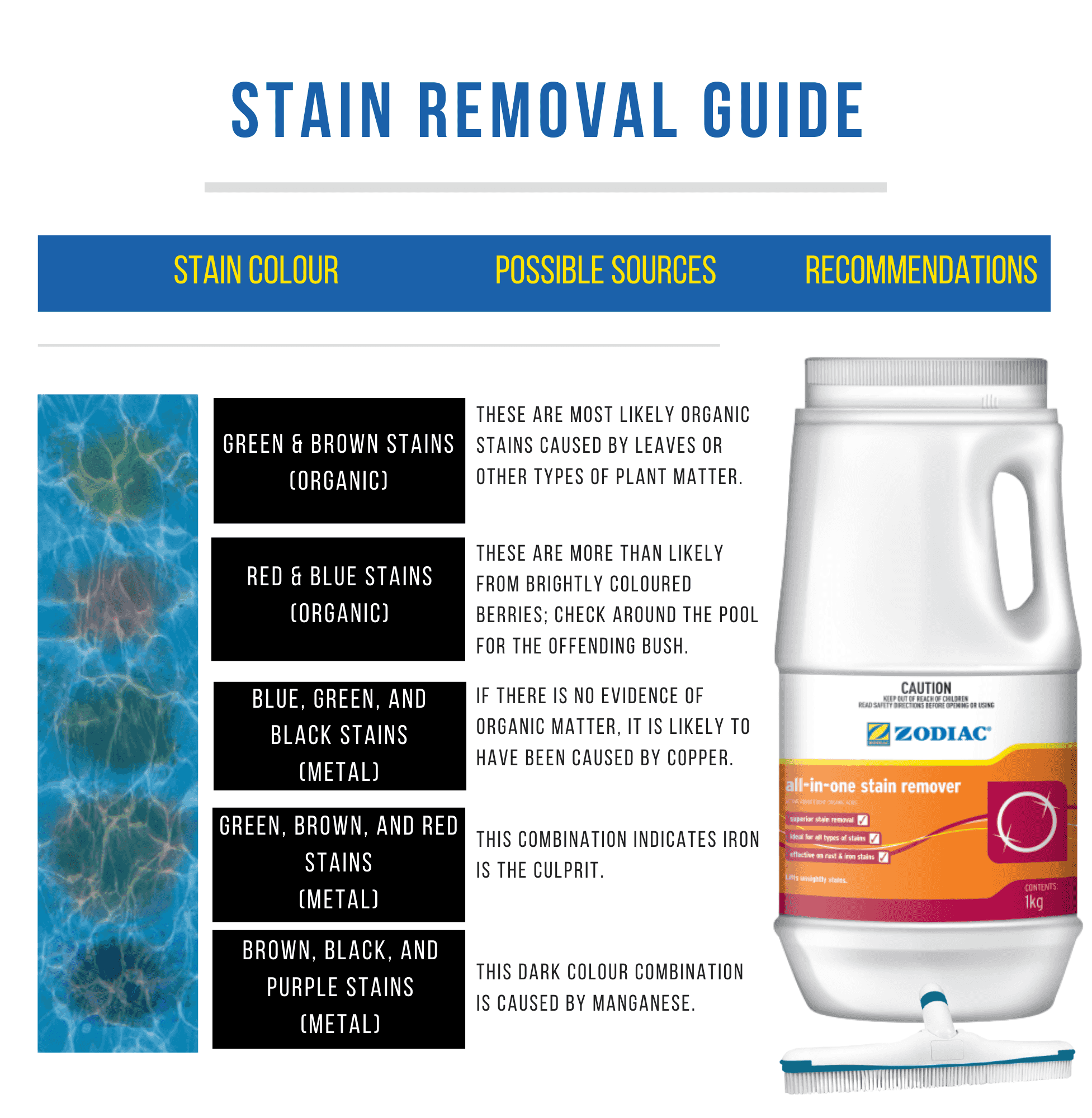
Test the stain
Testing is really the only way to determine what the stain is. To test, sprinkle different granular compounds directly on the stain and brush vigorously to find out.
Is it Organic?
Granular chlorine helps remove organic stains
Apply a considerable amount of chlorine directly to the stain, and it will come off easily
Is it Metallic?
Metal stains best react to ascorbic acid or granular Vitamin C
Apply crushed Vitamin C tablets to the stain and see if it fades or lightens
Is it Rust?
Rust stains react to dry acid or sodium bisulphate
Brush the dry acid into the stain and see if it fades away
How to remove pool stains
The good news is once you have figured out the type of stain that you are dealing with, it gets easier from there. Please note that the treatment does depend on the surface type. If the surface is vinyl or fibreglass or painted, then using any chlorines will potentially bleach the surface and cause irreversible damage.
Remove Organic pool stains
Of all pool stains, this is the easiest to remove. With a bit of elbow grease and the following method, you should be able to get rid of organic stains fairly easily:
Test the water for pH and alkalinity balances. The pH should be between 7.4 and 7.6 and the alkalinity should be between 100 and 150 ppm.
Shock your pool by following the instructions on the product packaging. (Remember to do this in the evening).
Thoroughly brush all the stains and let the pool circulate for at least 8 hours.
Repeat the process until the stain disappears.
Remove Metal Pool Stains
Metal pool stains are more difficult to remove since they only respond to certain chemicals. You might want to take a water sample to your local pool shop to determine exactly what kind of metals are plaguing your pool. You pool shop will be able to advise the specific chemical you need to remove metal stains.
Add the recommended chemical according to the manufacturer’s instructions.
Scrub the stains and run your filter for at least 1 hour.
Repeat the process until the stain disappears.
Prevent pool stains
Your first goal should be to keep your pool clean and properly treated. The cleaner the pool water is, the less likely you will find a tenacious stain. Check out our complete range of swimming pool and spa chemicals to make your pool sparkle. Here are a few more tips:
Trim trees and bushes near or around your pool to prevent debris and foliage from finding its way in the water.
Invest in an automatic pool cleaner to make the job easy and prevent stains from forming.
Make sure that you are testing the pH of your pool’s water regularly when the pool is in use. Stains can occur when the chemical balance is off.
Remember if you have stubborn stains, it makes sense to reach out to a pool professional for prompt and effective stain removal. Our team of authorised dealers is always here to help!
Recommended Products

Similar Guides

5 Reasons Why Your Pool Is Still Green Or Cloudy After Shocking
Nothing beats going for a dip in your pool on a beautiful summer day. You go to your backyard only to be greeted with a pool that looks like it’s been on a week-long bender.
That’s right. You’ve got a green pool! :(